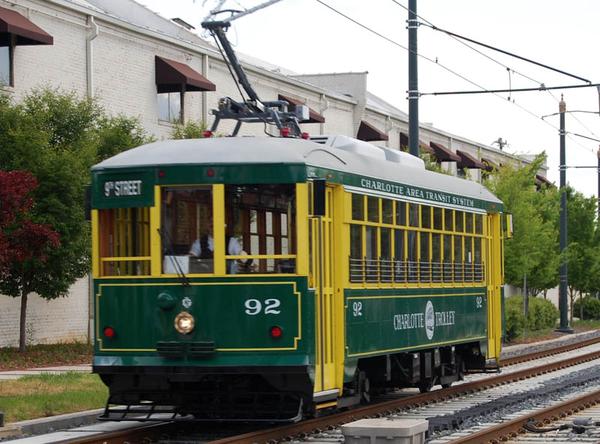
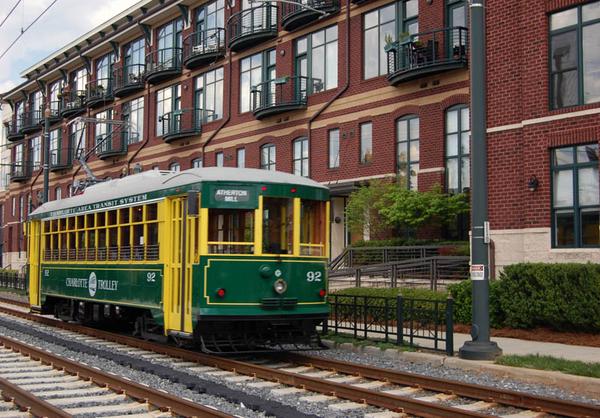
The nonprofit Charlotte Trolley began using a restored streetcar on a small rail spur in the South End in the late 1990's. The city later expanded the service through uptown to 9th Street, and the Charlotte Area Transit System began operating the trolley. Service stopped in 2006 for light-rail construction.
Ron Tober, Charlotte Trolley's executive director, headed CATS before he stepped down at the end of last year. He said the trolley helped convince Mecklenburg voters in 1998 to approve the half-cent sales tax for mass transit. That tax funds most of CATS' budget.
- Trolley joining Lynx on light-rail tracks - Charlotte Observer - 4/17/08
The annual operating budget for the new 9.6 mile Lynx light rail system is $11.5 million, while the trolley budget is $200,000.
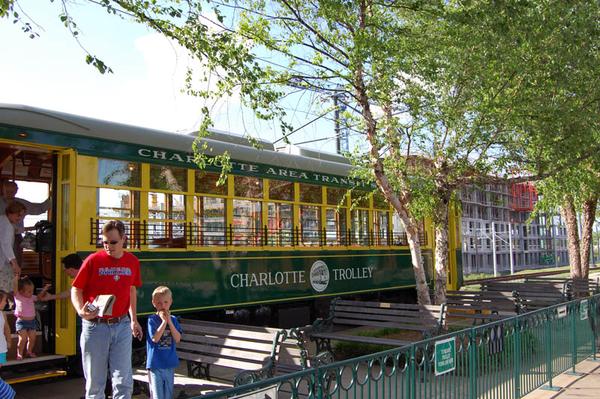
The Charlotte Trolley operates on the same track as the new light rail system. The trolley's addition means the corridor now offers residents two rail based alternatives with multiple stops, both short and long distance.
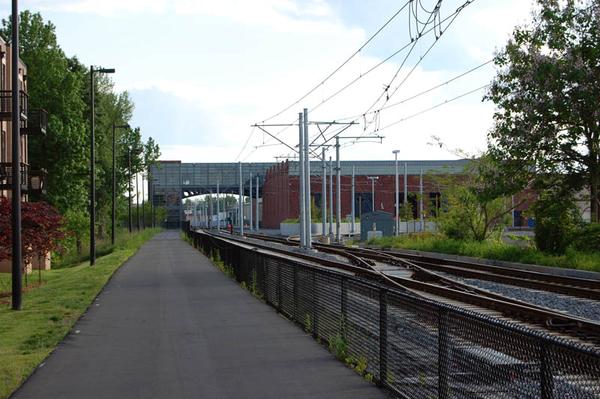
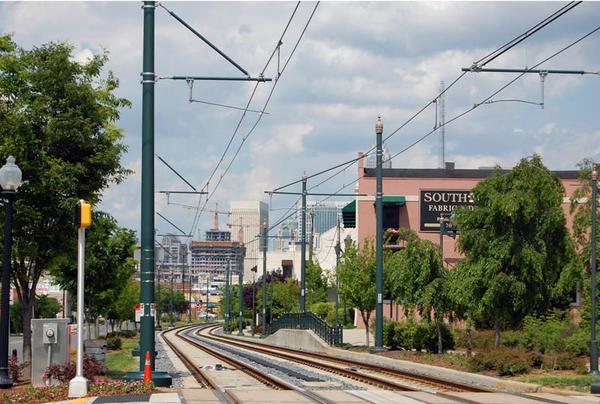
Looking south towards the light rail operations and maintenance center.
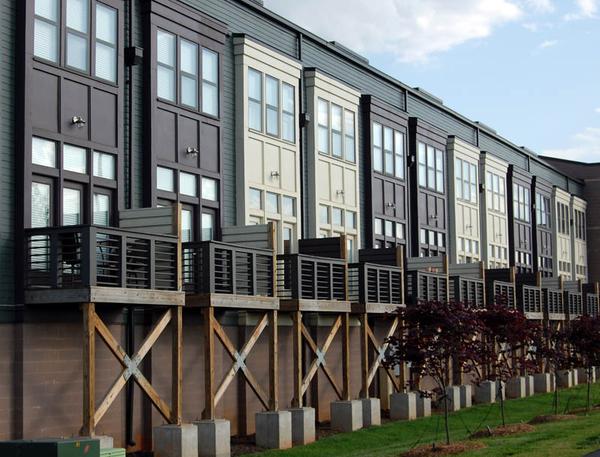
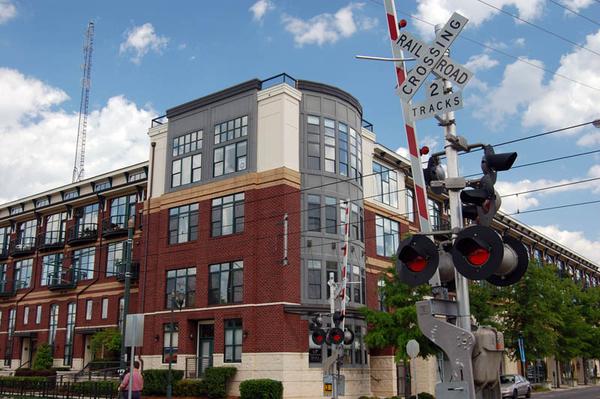
Transit Oriented Development at the New Bern Station.
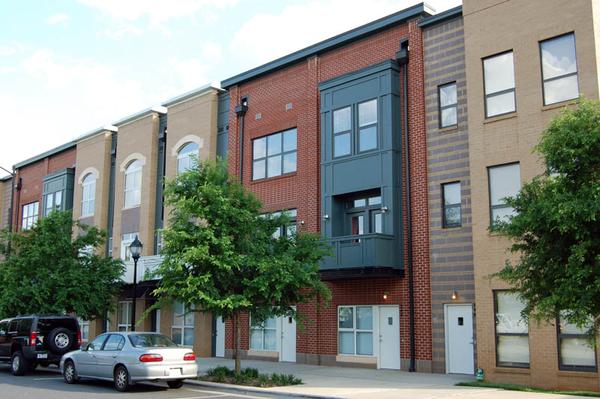
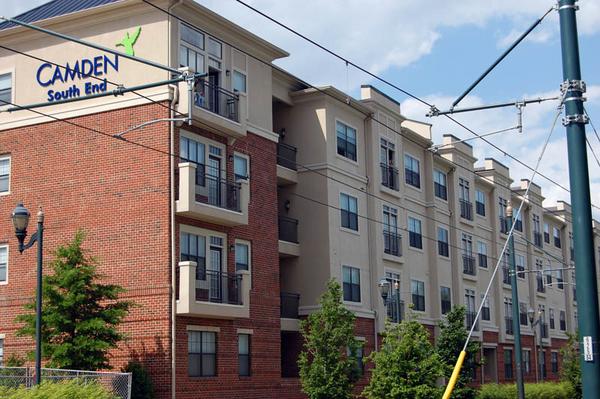
New residential development a half block from New Bern Station
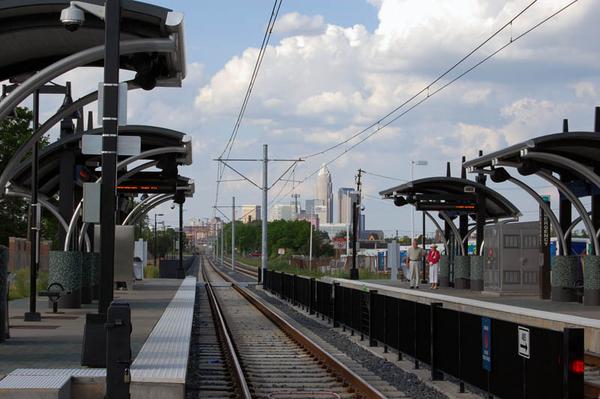
Looking north from the New Bern Station.
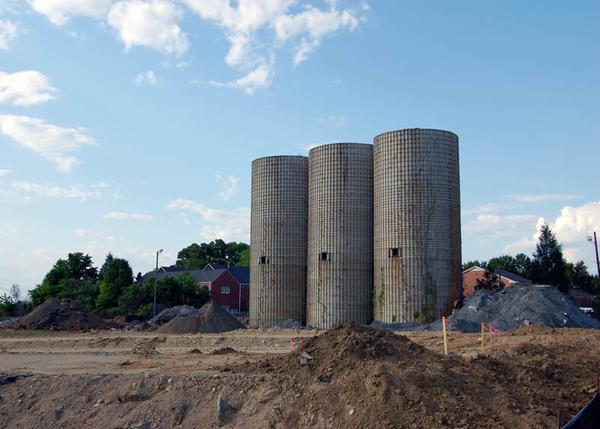
North of New Bern is a mixed-use project called Silos at Southend. A rendering is available here: http://silossouthend.com
Developers plan to keep these three old silos and incorporate them in with the design.
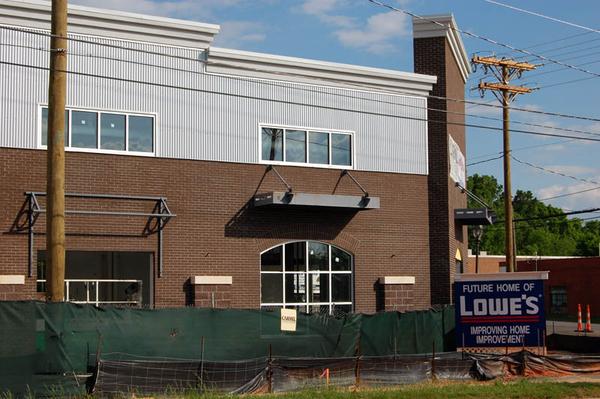
The corridor has also enticed Lowe's to move forward with the construction of an urban home improvement store near the line.
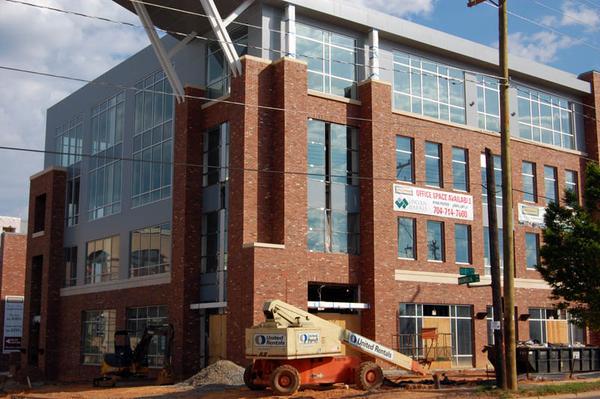
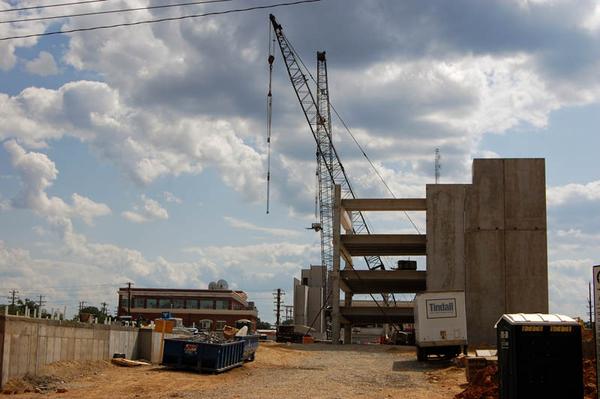
New construction near the Lowe's site.
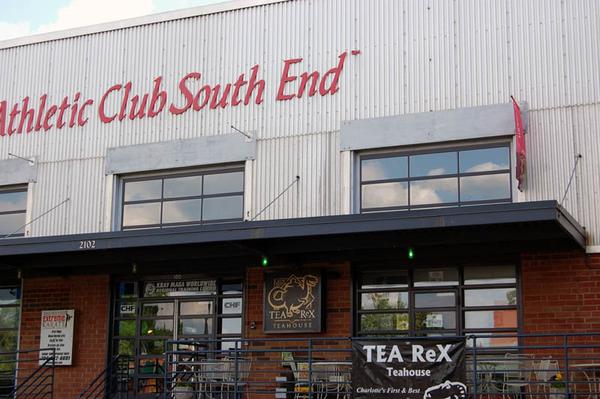
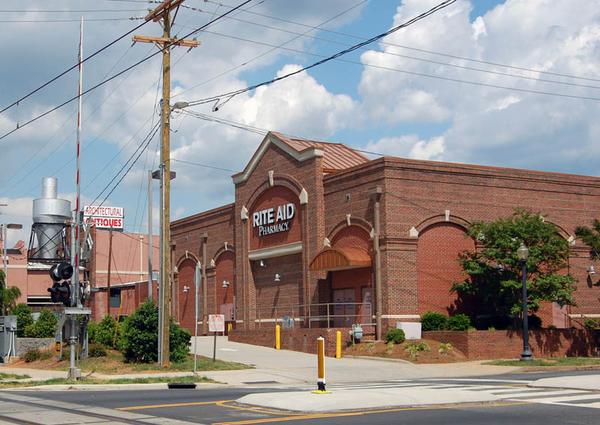
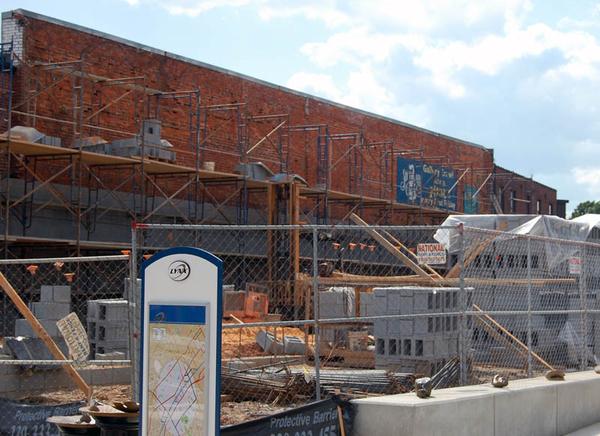
Adaptive reuse development near the Atherton Mill Station.
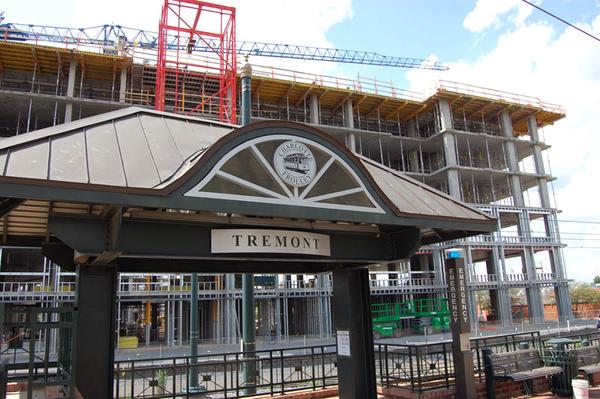
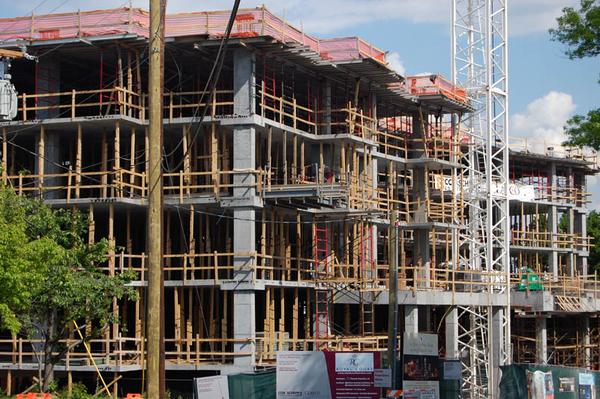
The Tremont (Trolley Stop Only) Station, a new 11 story mixed use project rises in the background.
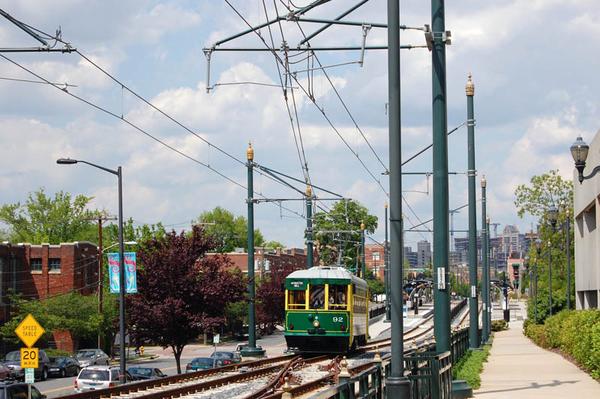
Looking north towards East/West Blvd. Station.
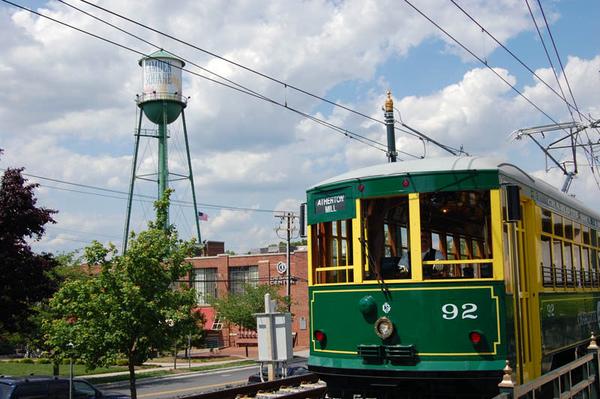
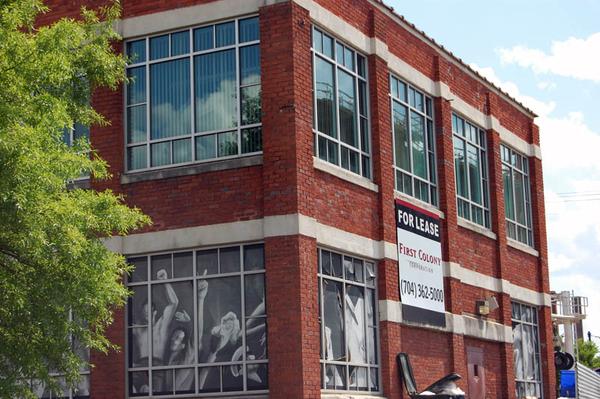
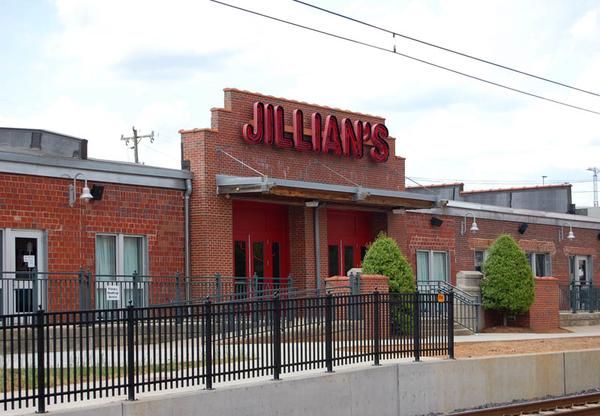
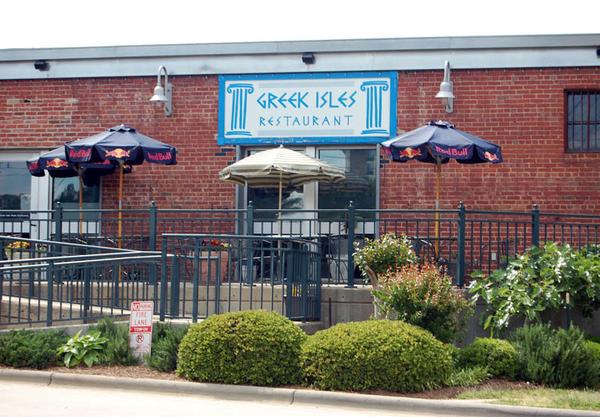
Old brick industrial mill warehouses now house new offices, lofts, and other businesses adjacent to the rail line.
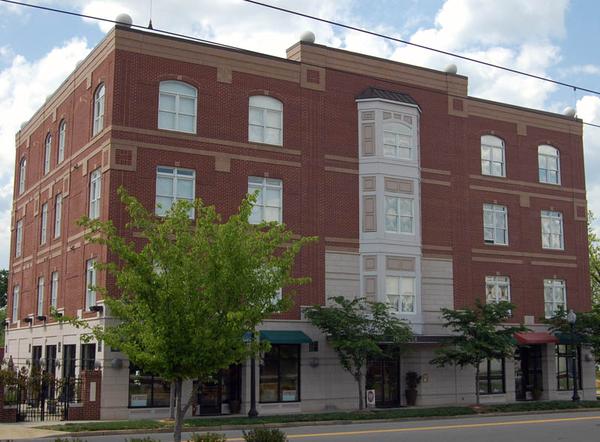
Additional development near the Bland Street Station.
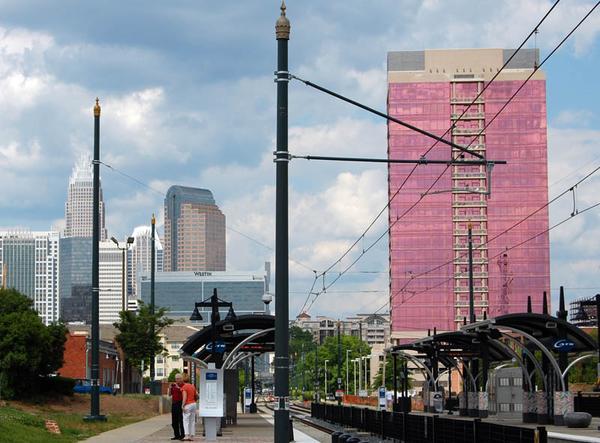
The Bland Street Station with Uptown Charlotte in the background.
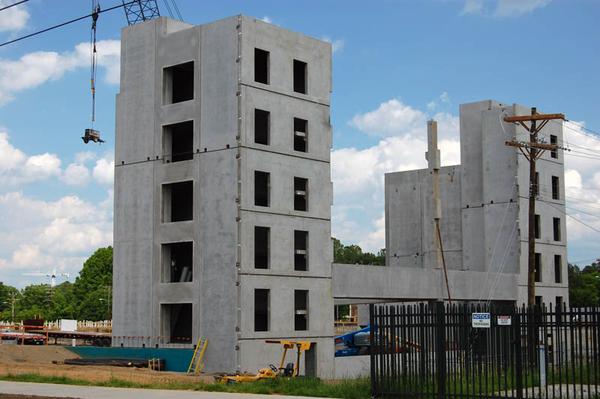
New construction of transit oriented development at the Bland Street Station.
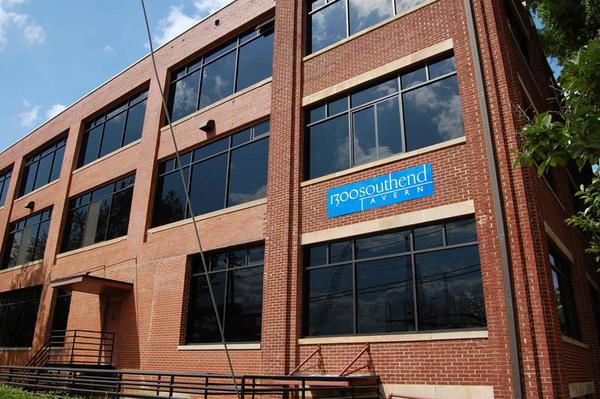
Development near Carson Station
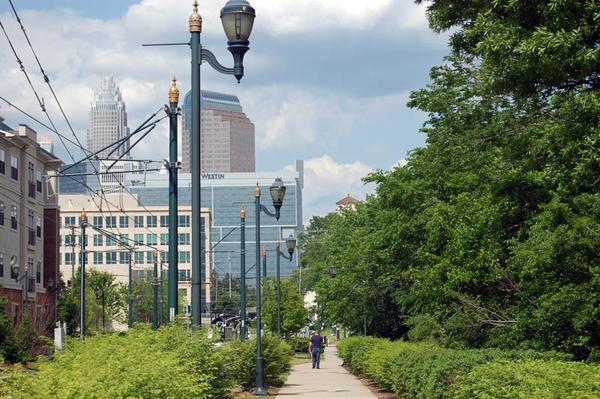
A pedestrian greenway paralleling the tracks with Carson Station in the background.
A northbound light rail train at Carson Station.
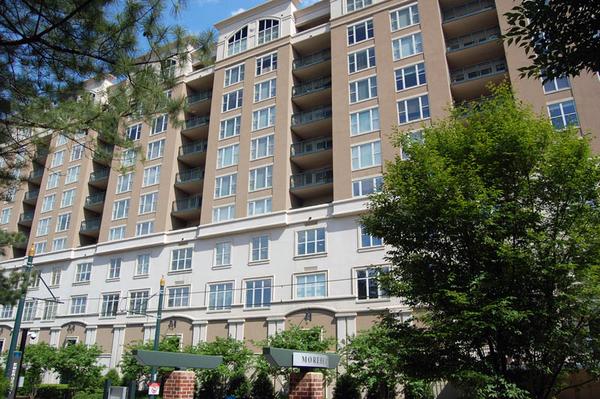
A residential development at the Morehead (Trolley stop only) Station.
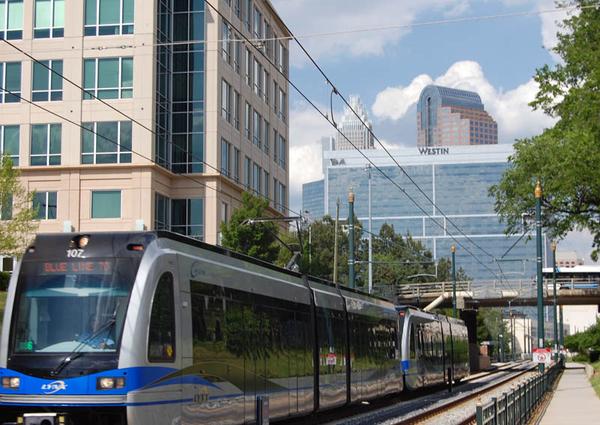
Looking north from the Morehead Trolley Stop as a light rail train passes through.
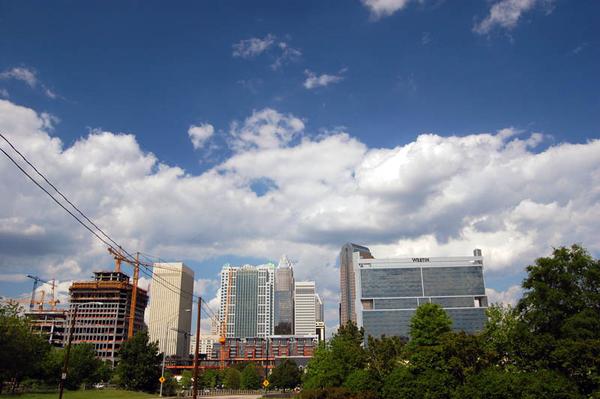
More construction taking place near the Morehead Station.
Light Rail Ridership Exceeds Expectations
"Ridership on Charlotte Area Transit has hit the highest level in fifty years.
Transit Keith Parker says the figures from February show CATS carried more than two-million passengers a total that has not been seen since the transit system was a privately-run entity. And compared to February of 07, Parker says ridership was up 35-percent.
He says the light rail weekday service carries more than 13-thousand riders a day, which exceeds projections by 40-percent. Parker says the train has already carried its one-millionth customer"
- Charlotte WBT News - 4/17/08
Based of the success of the starter light rail and streetcar systems, the Charlotte City Council recently approved $30 million to move forward with an 11 mile light rail extension, in addition to the commuter rail plans already on the drawing board. With gas prices now approaching $4.00 a gallon and residents still refusing to jump on the bus, JTA is starting to see the light. Will the leadership from City Hall be willing to finally hop on board?
Images provided by Initiald, a Charlotte forumer at www.skyscraperpage.com
Article written by Ennis Davis
jeh1980
May 16, 2008, 05:55:38 AMQuestion: Will the leadership of City Hall be willing to hop on board?
Answer: Of course, why not...if we can go to the city council and talk to them about it and tell them why light rail is so important, they will listen and understand. I think that the people @ MetroJacksonville.com
I think that we have had enough of wishful thinking...all talk but no action...on both sides. Let's do something if we want to see the future we all want to see...especially in downtown!
thelakelander
May 16, 2008, 08:23:04 AMI think you haven't been paying enough attention. There's been a lot more action from many of the people here than you would ever imagine. Just last night, I saw at least eight people I know post on this forum attending and participating in the commuter rail study.
second_pancake
May 16, 2008, 08:31:17 AMseeing things like this and like the DART in Dallas are what gives me hope for mankind...that maybe we're all not so completely self-absorbed afterall to think that we need to live our lives in a rolling box completely shut out from our fellow citizens (re: cars).
What a beautiful project!
vicupstate
May 16, 2008, 08:50:18 AMMight I ask how much YOU have done jeh1980?
Considering the massive amount of UNCOMPENSATED hours that Metrojax members have devoted to raising awareness through this site, AND through hands-on participation in JTA hearings and meetings, I think Metrojax is at the VANGUARD of this fight.
Your remarks are completely out of line.
BTW, the New York Times had an article on May 10 about transit in Charlotte which I will post. For an up and coming city like Charlotte, such publicity can't be bought at any price.
vicupstate
May 16, 2008, 08:52:12 AMMay 10, 2008
Gas Prices Send Surge of Riders to Mass Transit
By CLIFFORD KRAUSS
Correction Appended
DENVER — With the price of gas approaching $4 a gallon, more commuters are abandoning their cars and taking the train or bus instead.
Mass transit systems around the country are seeing standing-room-only crowds on bus lines where seats were once easy to come by. Parking lots at many bus and light rail stations are suddenly overflowing, with commuters in some towns risking a ticket or tow by parking on nearby grassy areas and in vacant lots.
“In almost every transit system I talk to, we’re seeing very high rates of growth the last few months,” said William W. Millar, president of the American Public Transportation Association.
“It’s very clear that a significant portion of the increase in transit use is directly caused by people who are looking for alternatives to paying $3.50 a gallon for gas.”
Some cities with long-established public transit systems, like New York and Boston, have seen increases in ridership of 5 percent or more so far this year. But the biggest surges — of 10 to 15 percent or more over last year — are occurring in many metropolitan areas in the South and West where the driving culture is strongest and bus and rail lines are more limited.
Here in Denver, for example, ridership was up 8 percent in the first three months of the year compared with last year, despite a fare increase in January and a slowing economy, which usually means fewer commuters. Several routes on the system have reached capacity, particularly at rush hour, for the first time.
“We are at a tipping point,” said Clarence W. Marsella, chief executive of the Denver Regional Transportation District, referring to gasoline prices.
Transit systems in metropolitan areas like Minneapolis, Seattle, Dallas-Fort Worth and San Francisco reported similar jumps. In cities like Houston, Nashville, Salt Lake City, and Charlotte, N.C., commuters in growing numbers are taking advantage of new bus and train lines built or expanded in the last few years. The American Public Transportation Association reports that localities with fewer than 100,000 people have also experienced large increases in bus ridership.
In New York, the Metropolitan Transportation Authority reports that ridership was up the first three months of the year by more than 5 percent on the Long Island Rail Road and the Metro-North Railroad, while M.T.A. bus ridership was up 2.3 percent. New York City subway use was up 6.8 percent for January and February. Ridership on New Jersey Transit trains was up more than 5 percent for the first three months of the year.
The increase in transit use coincides with other signs that American motorists are beginning to change their driving habits, including buying smaller vehicles. The Energy Department recently predicted that Americans would consume slightly less gasoline this year than last — for the first yearly decline since 1991.
Oil prices broke yet another record on Friday, climbing $2.27, to $125.96 a barrel. The national average for regular unleaded gasoline reached $3.67 a gallon, up from $3.04 a year ago, according to AAA.
But meeting the greater demand for mass transit is proving difficult. The cost of fuel and power for public transportation is about three times that of four years ago, and the slowing economy means local sales tax receipts are down, so there is less money available for transit services. Higher steel prices are making planned expansions more expensive.
Typically, mass transit systems rely on fares to cover about a third of their costs, so they depend on sales taxes and other government funding. Few states use gas tax revenue for mass transit.
In Denver, transportation officials expected to pay $2.62 a gallon for diesel this year, but they are now paying $3.20. Every penny increase costs the Denver Regional Transportation District an extra $100,000 a year. And it is bracing for a $19 million shortfall in sales taxes this year from original projections.
“I’d like to put more buses on the street,” Mr. Marsella said. “I can’t expand service as much as I’d like to.”
Average annual growth from sales tax revenue for the Bay Area Rapid Transit District, a rail service that connects San Francisco with Oakland, has been 4.5 percent over the last 15 years. It expects that to fall to 2 percent this year, and electricity costs are rising.
“This is a year of abundant caution and concern,” said Dorothy W. Dugger, BART’s general manager, even though ridership on the line was up nearly 5 percent in the first quarter of the year.
Nevertheless, Ms. Dugger is happy that mass transit is winning over converts. “The future of mass transit in this country has never been brighter,” she said.
Other factors may be driving people to mass transit, too. Wireless computers turn travel time into productive work time, and more companies are offering workers subsidies to take buses or trains. Traffic congestion is getting worse in many cities, and parking more expensive.
Michael Brewer, an accountant who had always driven the 36-mile trip to downtown Houston from the suburb of West Belford, said he had been thinking about switching to the bus for the last two years. The final straw came when he put $100 of gas into his Pontiac over four days a couple of weeks ago.
“Finally I was ready to trade my independence for the savings,” he said while waiting for a bus.
Brayden Portillo, a freshman at the University of Colorado Denver, drove from his home in the northern suburbs to the downtown campus in his Jeep Cherokee the entire first semester of the school year, enjoying the rap and disco music blasting from his CD player.
He switched to the bus this semester because he was spending $40 a week on gas — half his salary as a part-time store clerk. “Finally, I thought this is stupid,” he said, and he is using the savings to pay down a credit card debt.
The sudden jump in ridership comes after several years of steady, gradual growth. Americans took 10.3 billion trips on public transportation last year, up 2.1 percent from 2006. Transit managers are predicting growth of 5 percent or more this year, the largest increase in at least a decade.
“If we are in a recession or economic downturn, we should be seeing a stagnation or decrease in ridership, but we are not,” said Daniel Grabauskas, general manager of the Massachusetts Bay Transportation Authority, which serves the Boston area. “Fuel prices are without question the single most important factor that is driving people to public transportation.”
Some cities are seeing spectacular gains. The Charlotte Area Transit System, which has a new light rail line, reported that it logged more than two million trips in February, up more than 34 percent from February 2007.
Caltrain, the commuter rail line that serves the San Francisco Peninsula and the Santa Clara Valley, set a record for average weekday ridership in February of 36,993, a 9.3 increase from 2007, according to its most recent public calculation.
The South Florida Regional Transportation Authority, which operates a commuter rail system from Miami to Fort Lauderdale and West Palm Beach, posted a rise of more than 20 percent in rider numbers this March and April as monthly ridership climbed to 350,000.
“Nobody believed that people would actually give up their cars to ride public transportation,” said Joseph J. Giulietti, executive director of the authority. “But in the last year, and last several months in particular, we have seen exactly that.”
This article has been revised to reflect the following correction:
Correction: May 13, 2008
Because of an editing error, an article on Saturday about the increase in commuters who are turning to mass transit because of high gasoline prices misstated the increase in ridership on Metropolitan Transportation Authority buses in the first three months of the year. Ridership on the M.T.A.’s three bus agencies was up about 2.3 percent, not 10.9 percent. (The 10.9 percent increase in bus ridership referred solely to the M.T.A. Bus Company, which operates local and express bus routes around New York City.)
thelakelander
May 16, 2008, 09:07:21 AMLast night's meeting also included a presentation about the Orlando commuter rail project and how its approval would pave the way for rail here in Jacksonville and eventually a direct link between our two communities. They mentioned that when they made the mistake of rejecting an already FTA approved light rail system in the late 1990's, that money went to this Charlotte project.
I believe a mixture of the success of Charlotte's line and the economic development its stimulating, along with realizing the Charlotte project was built with money Orlando originally rejected has lead to that entire region (the suburbs too) agreeing to pay their fair share of the local costs for their proposed system, this time around.
Doctor_K
May 16, 2008, 10:07:04 AMOf all the quality articles, posts, and presentations offered on this great site over the years, I believe that this one stands out above most of the others. And that's not an easy feat!
This shows the real, tangible, physical, insert-any-other-adjective-here results that can be borne out of rail investment. When they say pictures are worth a thousand words, I say these pictures speak volumes. Very well done. I anxiously await the day that we see similar pictures to these, but actually in THIS city instead of somewhere else.
Hear hear, Vic. Googols of kudos to the MetJax staff and involved participants! Thank you for all you've done and continue to do.
pwhitford
May 16, 2008, 11:04:36 AMThis is becomming redundant to the point of madness! Hasn't this become as obvious as stating that the earth is round or the sky is blue! I am incensed by the paralasys and inertia of a buracracy more concerned with preserving what they have come to view as thier "entitlements" then with providieng the necessary and obvious releif to their constituents! This city is poised on the brink - we can either be bold and decisive by taking advantage of the abundant potential of our location and our resources (not the least of which are the voices on this site), and thereby cement our good fortune and future prosperety, or we can wallow in obscurinty and second-tier status out of what, fear? Lack of resolve? Inability? Conspiracy? Which is it to be?
pwhitford
May 16, 2008, 11:06:22 AMSorry for all the misspelling. I was a little incensed.
vicupstate
May 16, 2008, 11:33:57 AMOne little side note about the Lowe's that is pictured in this thread.
About 80% of the parking is located on the ROOF. How cool is that. It is also 'wrapped' in condos on two sides. This is the website for that project.
http://www.liveinsouthborough.com/plans.aspx
The Lowe's is attached to the townhouses inside the "L" shape they form.
It is no exageration to say that the corridor that this rail line runs through has EXPLODED with development in the last few years. What you see in the pictures here is but a small sample of what has ,and is, being built. I have seen it in person over the last few years and it never ceases to amaze me on every trip.
I would love to know the taxable value of everything that has been built within .5 mile on either side of this line. It would be multiple billions of dollars for certain.
scaleybark
May 16, 2008, 02:54:00 PMI used to drive on Southside Blvd, which runs parallel to the transit system. Southside used to be somewhat run down and congested. It was the part of town where you would not be surprised to see businesses surrounded with barbed wire fencing. At the time, I believed that part of town was in permanent decline. This was about 15 years ago, when there was no talk about a train that I remember. To see these pictures is just mind-boggling. I never would have dreamed a developer would have given this corridor a single glance.
"I would love to know the taxable value of everything that has been built within .5 mile on either side of this line. It would be multiple billions of dollars for certain. "
I think the connection between dense development and transit has been proven. There is plenty of big-money in the world; I wonder if any of them has ever thought about the idea of building a transit system as a loss leader, or catalyst, to the money making urban real estate development. I wonder, if you did the numbers, if the development value would outweigh the transit cost to an extent that it would interest big-money investors.
jeh1980
May 17, 2008, 03:12:56 AMConsidering the massive amount of UNCOMPENSATED hours that Metrojax members have devoted to raising awareness through this site, AND through hands-on participation in JTA hearings and meetings, I think Metrojax is at the VANGUARD of this fight.
Your remarks are completely out of line.
BTW, the New York Times had an article on May 10 about transit in Charlotte which I will post. For an up and coming city like Charlotte, such publicity can't be bought at any price.
May God bless you and thanks for understanding
jeh1980
JaxNole
May 17, 2008, 08:07:41 AMSo it appears we have a City Council few allies. Who has experience working with them and what has been the outcome?
thelakelander
May 17, 2008, 08:24:08 AMSeveral of us have experience in working with various members. The most visible outcome that I've seen is the elimination of BRT through the heart of downtown, the potential revision of the downtown parking ordinance and the inclusion of many issues into the JEDC's Downtown Action Plan. This entire site was founded on the momentum we gained with the help of former Councilwoman Suzanne Jenkins, who gave us an opportunity to originally present at a City Hall meeting.
Ocklawaha
May 17, 2008, 12:29:39 PMJeh1980, I understand your frustration at not seeing sweeping change. I too have refined bridge burning to an art form.
First let me say you are ALWAYS invited to attend my meetings, anywhere, anytime, Ditto for anyone else. Rather then say "We did too..." or "You said"-"We said", I thought a few action notes might be in order.
Just the highlights since JAN 1, 08:
*JOL-Jax out Loud forum, MJ-MetroJacksonville web, Ock-Ocklawaha, TU-Times Union, JTA-Jacksonville Transportation Authority, Edwards-Edwards Rail Car, BRT-Bus Rapid Transit, JTCO-Jacksonville Traction Company (streetcars/Light Rail)
JOL met with City Councilwoman for lunch and transit-Trolley/Skyway talk.
MJ/Ock/Council met with transportation sub to discuss pulling plug on BRT (as planned)
MJ met with Mayors aid to present alternative to JTA and BRT.
MJ met with Mayors office "scheduled us at MJ" to be featured speakers at a future conference on transit
Ock met with Folio to explain Trolley system
Ock met with TU/Tim to explain Francis Lytle Skyway
MJ met at all 4 BRT community meetings
Ock met with contractors on Light Rail and walked the system.
Ock gathered concepts and pre-bids on stations with costs
MJ/JOL met with Ock and gathered in numbers, facts and figures
Ock met with bridge builders for cost and concepts
MJ toured North line with Ock and Folio
Ock and TU toured North Line
MJ met with JTA board of directors
Ock toured North line with JTA officers
MJ/JOL attended FDOT presentation on Jax Transportation Center (was told the tunnels were gone!)
Ock dug into the tunnels and posted photos of them on MJ/JOL
Ock contacted old friend that owns a trolley building company
MJ/OCK discussed how to go private on the streetcar
Ock/Edwards toured the North Line, Riverside and downtown
Ock/Edwards/(Others) reformed The JACKSONVILLE TRACTION COMPANY, INC (JTCO). Original streetcar firm.
MJ/JTA met to see/discuss the BRT plan, presented "Gary Street Busway" to serve West 1/2 of Southbank
MJ/JTA met to see/discuss the commuter rail plan
JTCO starts marketing study on tourist-transit-park-museum concept
Ock energy companies meeting to discuss (GREEN) power generation
MJ/JTA/Ock had dinner for casual talk of total plans
MJ/JTA/Ock meeting to discuss commuter rail, injected GAINESVILLE into plan, JTA adopted our 3 routes
These are just the high points, there have been at least twice this many meetings and countless hours of research in University and City libraries. Anyone that thinks this is "all talk" should follow us around a few days. Also, watch the TU...I'm told the editorial pages around or just after Memorial Day? Don't know what their planning, but it will probably spell more work to do...ugh.
OCKLAWAHA
Even though we have the data to back us up, and could make him famous, Mayor Peyton just won't meet with us... Mr. Mayor, your invited to dinner with us, or with me, I think you'd like what you hear!
stephendare
May 17, 2008, 01:03:40 PMAnswer: Of course, why not...if we can go to the city council and talk to them about it and tell them why light rail is so important, they will listen and understand. I think that the people @ MetroJacksonville.com
I think that we have had enough of wishful thinking...all talk but no action...on both sides. Let's do something if we want to see the future we all want to see...especially in downtown!
Its important to keep concentrated on action rather than just talk! I hope that we can cunt on you to help out by continuing to speak and remind the powers that be that we have work to do!