2006 population comparison
Jacksonville Metropolitan Area: 1,277,997
Memphis Metropolitan Area: 1,260,581
Difference: Jacksonville +17,416
City of Jacksonville: 794,555
City of Memphis: 670,902
Difference: Jacksonville +123,653
Memphis Trolley route map
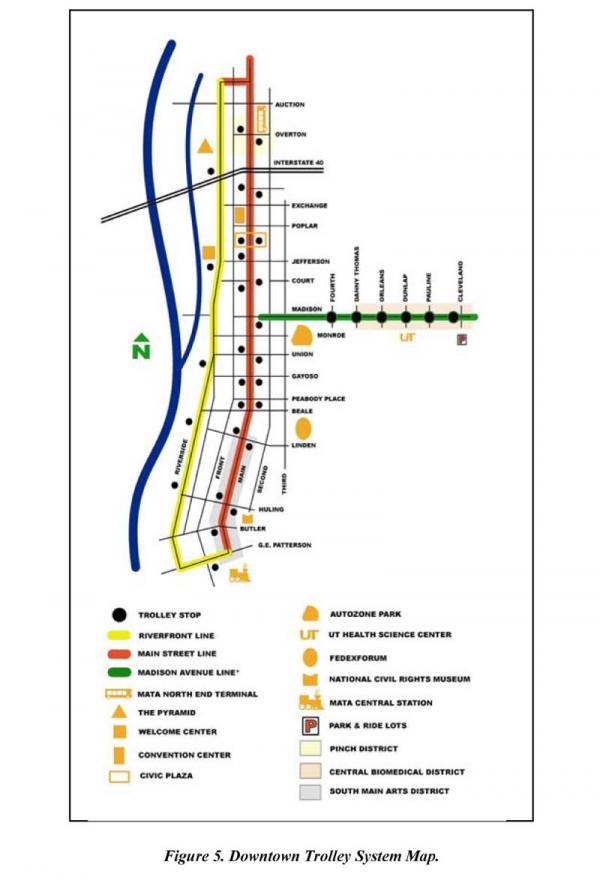
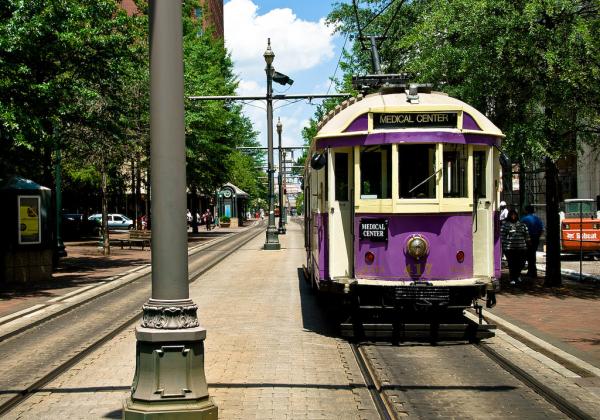
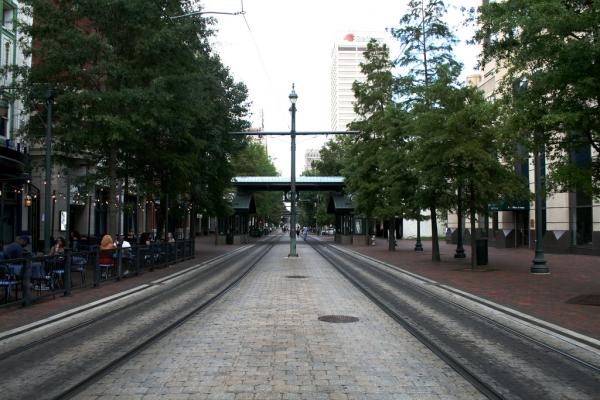
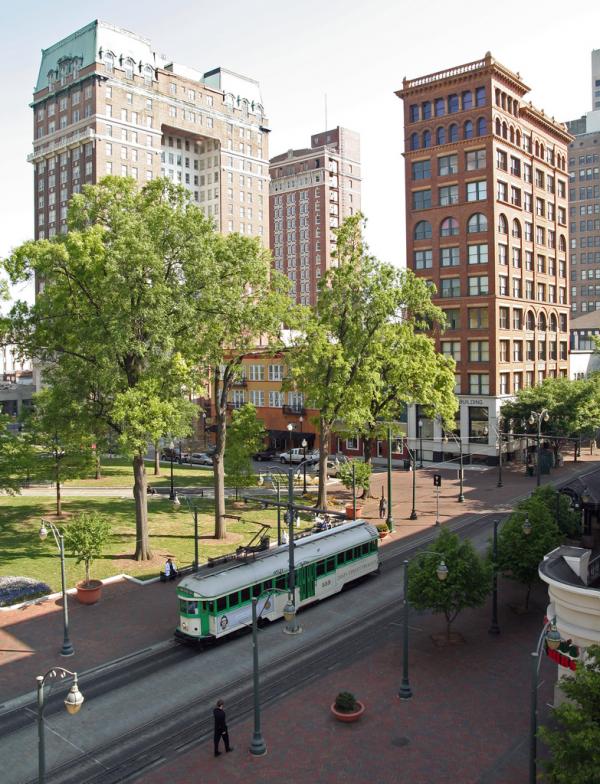
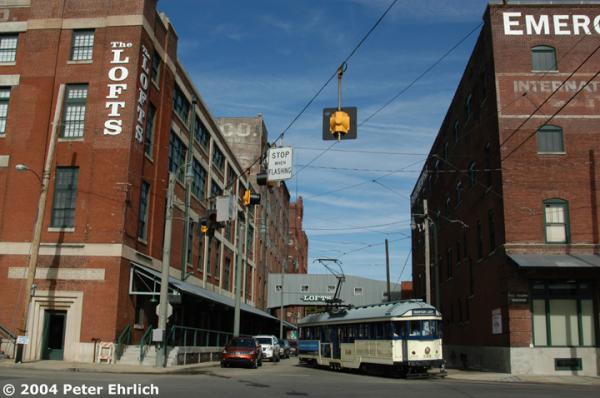
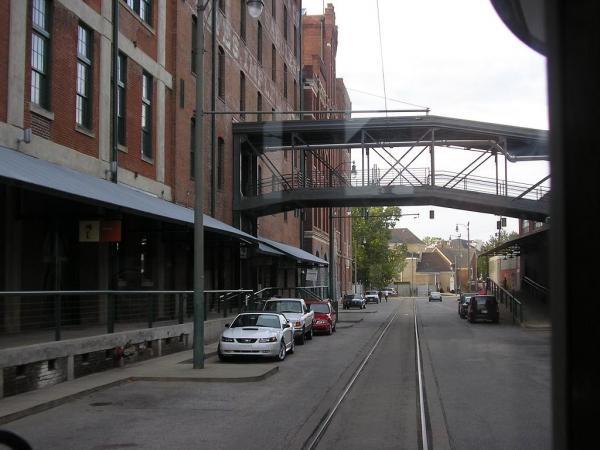
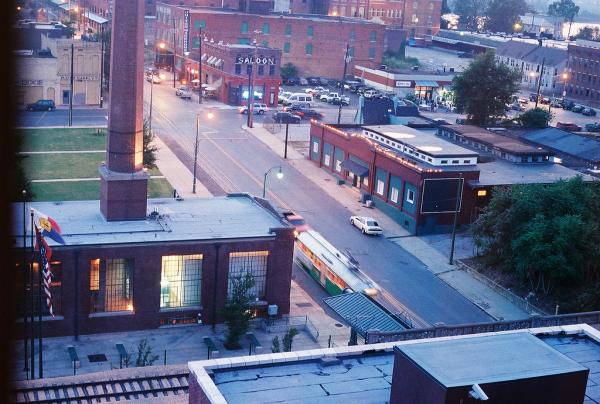
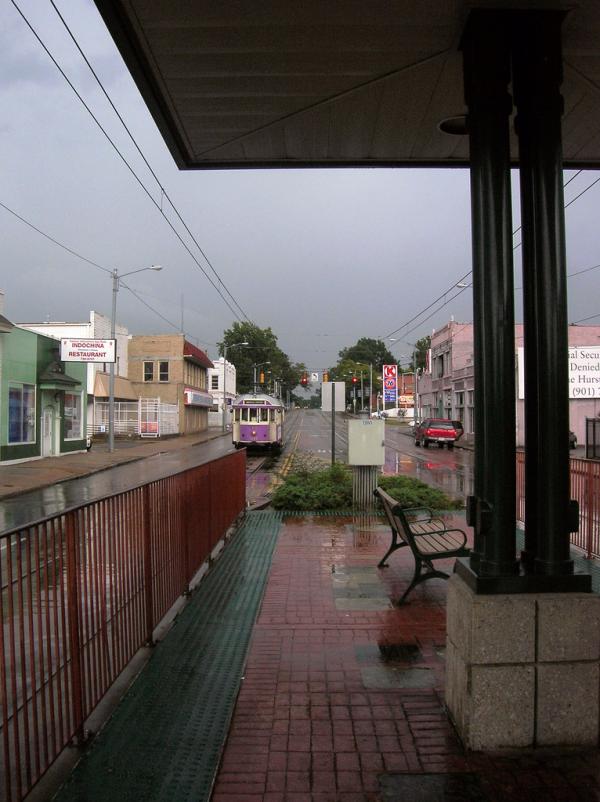
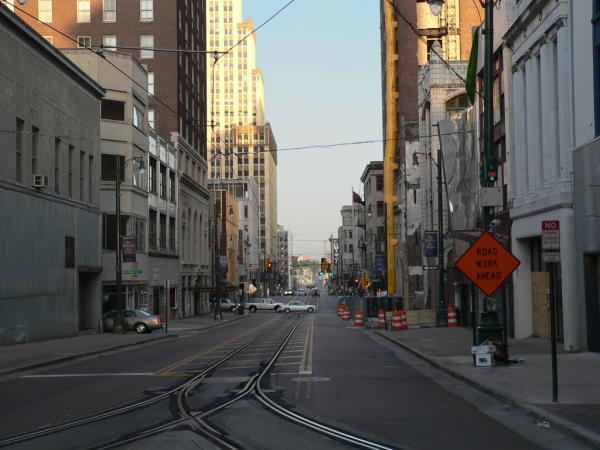
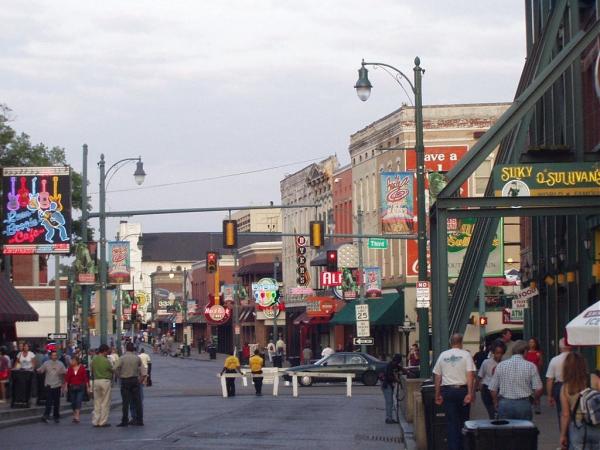
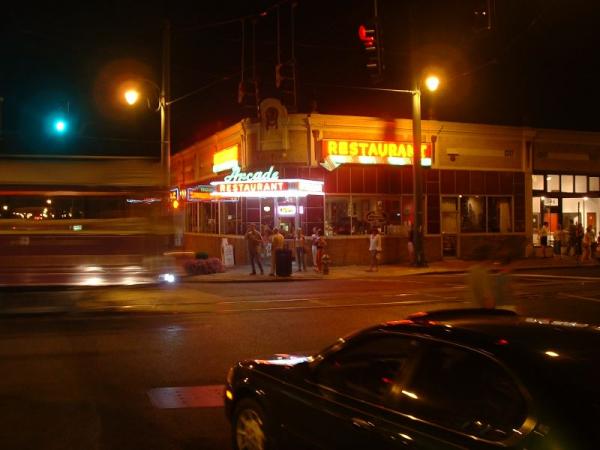
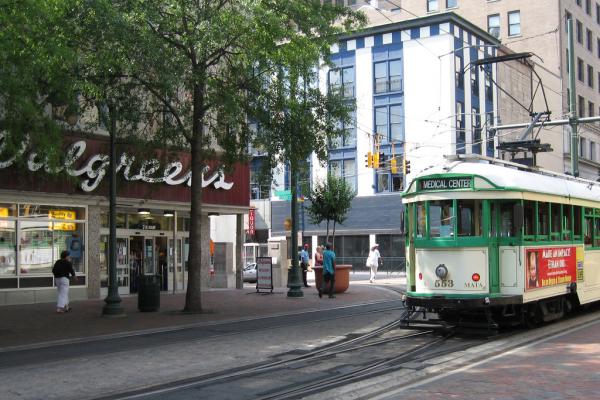
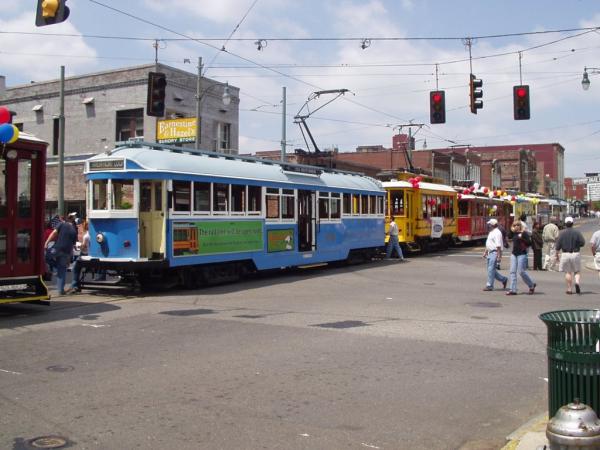
The Memphis Area Transit Authority (MATA) operates the Main Street, Riverfront and Madison Avenue trolley lines. As illustrated by the system route map, the trolley lines directly serve quality destinations in inner city Memphis.
Main Street Line
The 2.5 mile Main Street line opened in 1993 at a cost of $35 million dollars ($14 million/mile). This construction project included a 0.75-mile pedestrian mall, 20 wheelchair accessible trolley stops/stations and six Porto type trolley vehicles from Porto, Portugal. Each vehicle can accommodate about 50 passengers.
Riverfront Line
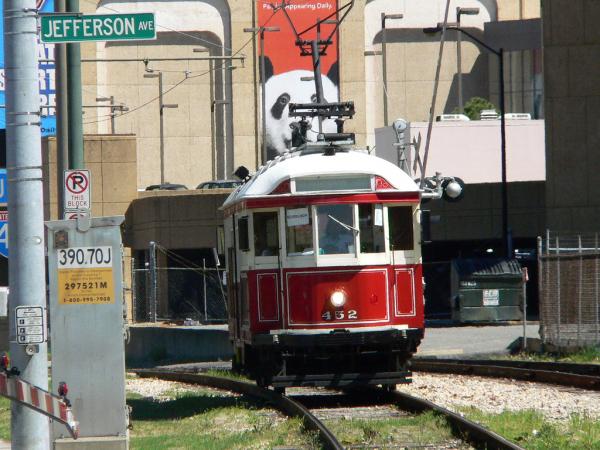
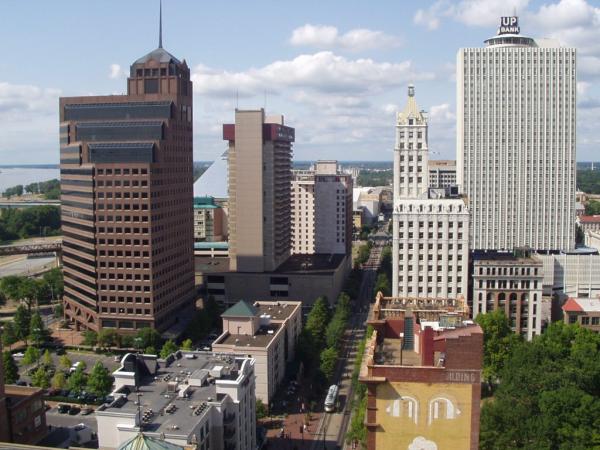
The 2.2 mile single track Riverfront line opened in October 1997. Over 2 miles of this extension utilizes an abandoned railroad track purchased from the Canadian National/Illinois Central Railroad (CN/IC). The MATA also purchased and restored five 45-foot long Melbourne type trolley vehicles from Melbourne, Australia. Each vehicle can accommodate up to 100 passengers. In a classic case of "Taking Advantage of what you already have", the total cost of the Riverfront line was $9 million dollars ($4.1 million/mile).
Madison Avenue Line
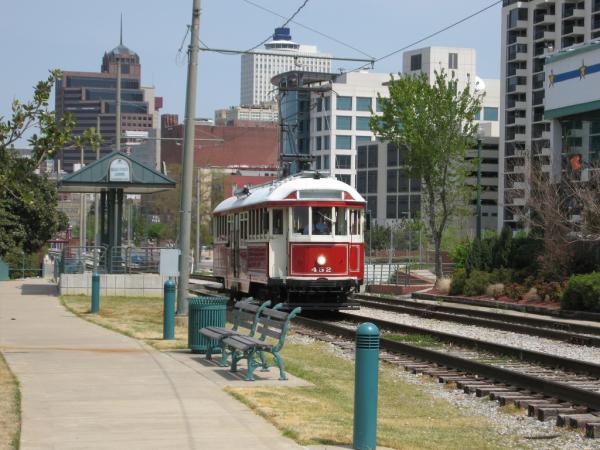
The 2-mile Madison Avenue line opened in March 2004 at a cost of $58 million dollars. It connects the region's two largest employment centers, downtown and the Medical District with one another. The line consists of double-track rail with six stops located in the street. Three additional Melbourne vehicles were renovated and one Birney replica vehicle was manufactured as a part of the project.
Economic Development
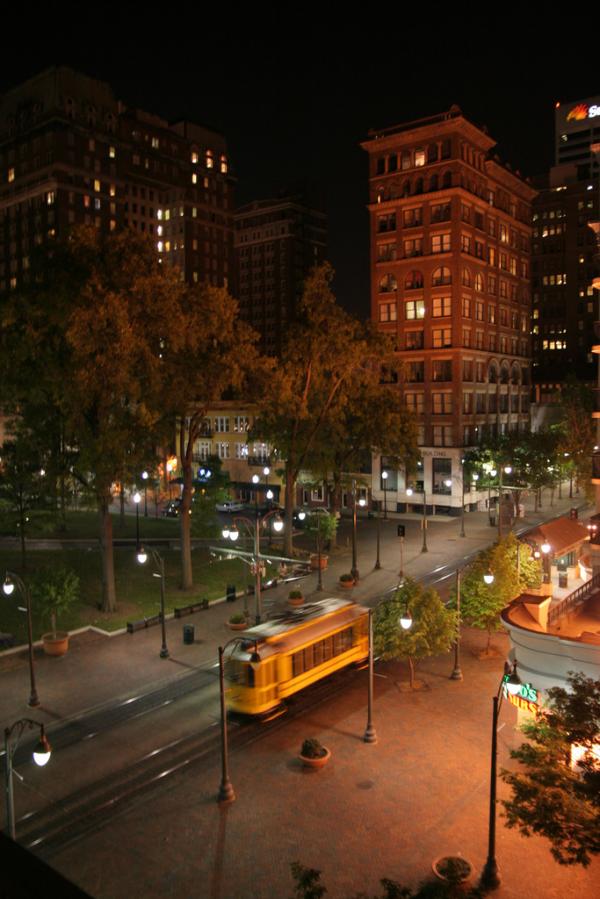
The base fare is $1.00, except during lunch when fares drop to $0.50. On the Main Street Loop, the trolleys operate on roughly 10-minute headways. On Madison Avenue, the headways are 15 minutes.
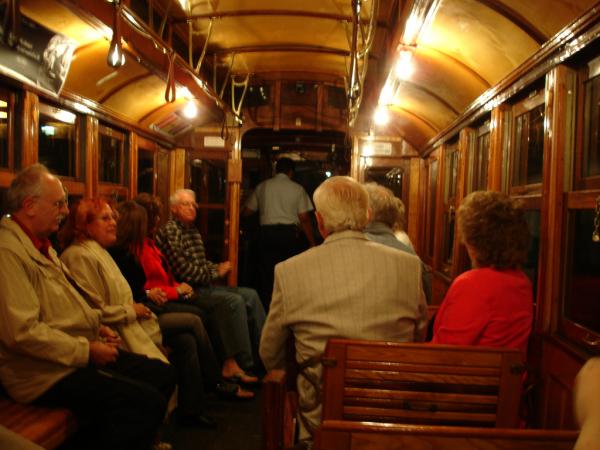
Ridership for the rail system has grown from 530,000 in 1994 to slightly over one million in 2005.
Each line appeals to a different market segment. For example, a 2001 survey concluded that 52% of trips on the Main Street line were taken by residents, while 75% of the trips on the Riverfront line were by non-residents.
The Future:
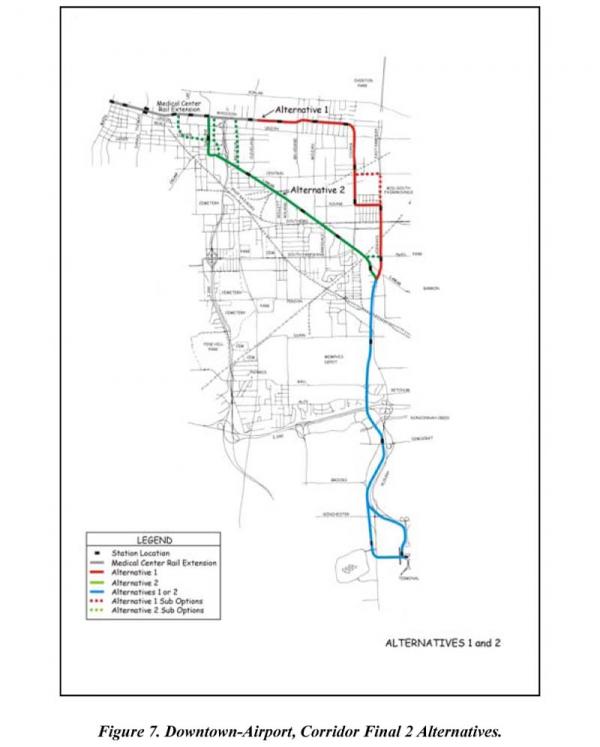
Sorry, you won't find transit planners in this community favoring bus rapid transit over rail or believing that they are too small for rail. Instead, planners have set their sights on extending the Madison Street line 10 miles to connect downtown with the airport. However, instead of streetcars, the mode of operation will be light rail, since the Madison Street line was constructed to accommodate light rail vehicles.
Conclusion:
Memphis' three lines prove that the pricing of rail does vary, depending on taking advantage of opportunities when they present themselves to decrease the costs. This is evident with the Riverfront Line, which cost $4 million/mile due to the purchase and use of existing abandoned freight rail.
On the other hand, the Madison Avenue line was constructed from scratch in the middle of a major street for $29 million per mile. Once again, here in Jacksonville, we have the opportunity to be on the lower end of this price range due to opportunities such as the city-owned S-Line corridor and the CSX A-line that keeps knocking at JTA's door.
For more information on trolleys and light rail in Memphis, view the PDF
Next in series: Charlotte Area Transit South Line light rail
gatorback
August 28, 2007, 07:22:22 AMMetroRail was approved by Austin voters in 2004. Since then Capital Metro has generally decided on the location of each station and work has been done so it looks like they will be on line fall 2008 as planned. That's 4 years after the vote. It took years to get to a vote. Would Jacksonville follow a similar process?
downtownparks
August 28, 2007, 08:54:39 AMThat city looks remarkably like Jacksonville... only with a pulse.
downtownparks
August 28, 2007, 08:55:50 AMBTW, this can be tied in the the Stadium district and the sky way for a similar effect as extending the skyway to the stadium. You can do this and only lose two lanes, and it would be a draw. People like trolleys.
Ocklawaha
August 28, 2007, 09:22:17 AMNo lanes lost to this Trolley in downtown Rotterdam
Downtown or the suburbs, you won't lose ANY lanes with Trolleys. Trolley lanes can be paved and they line up just like buses at the stoplights (if we want). Just like the old movies, you drive in the Trolley lanes too.
Portland has brought back an old idea that is interesting. They pave the Trolley lanes with paver stones (cobblestone). It is a bit rough and makes a distinct roar when you drive on them. The cool thing is, they retain the lanes for passing, or vehicle moves, but it discourages driving long distances in them (unless you are a Trolley nut). It just keeps traffic down and it is totally passive. The flip side of the stone lanes is it can be removable, whiich means that track adjustments can be done at a low cost and are easy to get to.
Why not Jacksonville? We need to look at the Convention Center funding ideas and tie a downtown redevlopment district, New Convention Center and Heritage Trolley all to a simple bed tax, airport tax, or other funding source. Then we need to start digging...
Ocklawaha
gatorback
August 28, 2007, 09:47:04 AMOh god, not pavers! People always wreck on those things isn't that why we got rid of them in the first place. Try cycling on them at speeds greater then 15 you will wreck. Add rain and that new Avanti will need fender work for sure. Since my ride was manufactured in the UK, I'd be safe as my vechical is in the shop like 120% of the time.
thelakelander
August 28, 2007, 09:50:21 AMImagine if we had to vote to approve BRT. It would fall faster than Michael Vick's bank account. The Austin system is a great one to look at in terms of affordability.
Capital Metro says it will use diesel-powered cars, similar in scale and look to a light rail car, with an engine and driver's cab at each end, allowing cars to reverse direction without some sort of turnaround.
Initially, the agency would run about 14 trains a day, four or five south from Leander in the morning on 30-minute intervals, with one or two in the reverse direction, and the reverse of that approach going out from downtown Austin in the afternoon. There likely would be a couple of trains at midday, one in each direction.
The stations, by and large, would be simple affairs with a raised platform, some shelter, a ticketing machine and some seating. At busier stops, the stations could be more elaborate, and a few will have park-and-ride parking lots.
The agency also plans to have "circulator" buses waiting for the trains at its final stop near the Austin Convention Center to ferry people to the rest of downtown, the Capital complex and the University of Texas.
Buoyed by the overwhelming approval of rail, Capital Metro planners seem to be revving up plans for additional rail expansion. These includes two more regional "commuter" lines, a possible streetcar system, light rail lines in Central and South Austin, or the extension of some type of rail service across downtown.
http://www.lightrailnow.org/news/n_railvote2004-win.htm#AUS_20041103
The Red Line will run on 32-miles of existing freight tracks between Leander and Downtown Austin. It will provide convenient service for suburban and central Austin residents. Future connections are being studied along existing Capital Metro freight tracks from Downtown to Manor and beyond. Future extensions along TxDOT’s abandoned MoKan corridor are also possible.
http://allsystemsgo.capmetro.org/capital-metrorail.shtml
32 Miles of rail for $112 million, which is double the initial estimate of $60 million in 2004. Our BRT is 29 miles of busway for $750 million and we have 18 years to go before it opens. Whoever said rail costs more than dedicated busways is a flat out liar.
Tuesday, May 22, 2007
The Capital Metro board awarded a $112 million contract Monday to Veolia Transportation Services Inc., a French company, to run the agency's freight rail and commuter rail operations for the next six years and four months.
The initial cost to run commuter rail is $9.4 million a year, including separate debt payments for its rail cars: almost twice the $5 million annual operating cost estimate shared with the public during the 2004 campaign to approve the 32-mile line from Leander to downtown Austin. The line will begin operations in late 2008.
Rodolfo Gonzalez
AMERICAN-STATESMAN
(enlarge photo)
Jim Skaggs: Rail opponent says, 'Capital Metro has been deceptive at best, lying at worst,' in its presentation of the cost.
The operating cost could be higher if Capital Metro, as some board members want, brings all commuter rail workers under the agency's umbrella and union pay scale rather than having them work directly for Veolia. Furthermore, Rich Krisak, Capital Metro's rail manager, said the numbers do not include fuel costs. Capital Metro will pay those directly, including an estimated $700,000 annually to fuel the diesel commuter rail cars initially.
Taken together, that would bring the first-year operating cost to $10.1 million.
Right Track PAC, a political action committee that worked closely with Capital Metro during the 2004 election, said in a widely disseminated mailer during the campaign that "Cap Metro estimates the new commuter rail system will cost approximately $60 million in capital and construction costs, and will require an additional $5 million annually to operate the trains and to lease-purchase the rail cars."
"It's pretty clear that from the beginning, Capital Metro has been deceptive at best, lying at worst, in their presentation to the public of the cost of this commuter rail system," said Jim Skaggs, a retired high-tech executive who has opposed Capital Metro rail ventures for the past decade. "This just confirms that they can't afford to continue on the way they have."
Capital Metro spokeswoman Andrea Lofye, when asked about the increased costs, said, "First of all, we don't know who Right Track PAC was. What we put out had different costs. . . . Our operating costs in the Veolia contract are on par with our own independent estimates for commuter and freight services."
Right Track PAC's chairman was former Austin Mayor and now state Sen. Kirk Watson, a Democrat. Its treasurer was former Austin City Council Member and longtime civic leader Lowell Lebermann Jr. According to a "Long-Range Transit Vision Update" released by the agency in May 2004, "Initial operating costs are estimated at $5M — including lease-purchase of vehicles."
The $112 million bid award to Veolia includes:
• $35.6 million for commuter rail, not including the cost of the rail cars.
• $61.5 million for freight rail operations, beginning in October. Capital Metro has another subcontractor handling freight rail operations on its track, primarily runs to and from the Marble Falls area to haul rock.
• A $14.6 million contingency, or 15 percent of the total, for the company. Krisak said much of that contingency is in place to account for possible quick growth in both the commuter rail and freight rail systems. Capital Metro's six cars will handle just 2,000 passengers a day, running primarily at rush hour.
The payments to Veolia are based on an hourly rate, however, and would increase if the agency decides to run the commuter rail service on an all-day basis or extensively on weekends.
The agency is considering ordering more cars.
bwear@statesman.com; 445-3698
Commuter rail costs
• $35.6 million of the $112 million bid is for commuter rail.
• First-year operating cost would be $5.2 million.
• Agency has $4.2 million annual payments to retire rail car debt.
• Fuel would cost $700,000 a year initially.
http://www.statesman.com/news/conten...2capmetro.html
gatorback
August 28, 2007, 10:06:20 AMMark, my co-work and car-pooler lives in Leander and talks about how the property value has gone up since Capital Rail started building the train station there. It was family fun at the Grand Opening of Leander Station -- Capital Metro's Newest Park & Ride. The Red Line service will begin there in late 2008; however, the station is already open and you can park and ride the 983, 986 or 987 busses into town. That day was June 2. I like the marketing campain, "Dump the Pump". Think your mayor wants that? ha
avonjax
August 28, 2007, 11:06:00 AMI think the city's plan for the s-line is further proof that they and JTA are truly anti-rail.
For a city that wants to project an image of a progressive metropolis we sure have some small town minds running the place.
It's hard to believe that JTA is not looking to alternative transportation ideas when it's obvious that fuel prices are going nowhere but up.
I would still love to know why the JTA is so gung-ho on the BRT.
Ocklawaha
August 28, 2007, 11:25:09 AMTherein lies the problem. Jacksonville Mayor Peyton is tied to big oil and asphalt (an oil product). He knows that any successful transit system is going to cut the number of automobiles on the highway. He also knows that cutting automobiles on the highway will effect the family bottom line at Gate. Thus, he and his administration have no interest in seeing a REAL alternative to the freeway in Jacksonville, it's bad for business. Sad that these "public servants" value their own dollars more then the lives of the people they effect with their bad decisions.
How good an alternative is Light Rail? Well look at some overly simple math:
JTA operates over 1,476 miles of bus routes, and carrys right at 10 million passengers a year, (which is quite poor for a City of our size and population). That comes out to generating about 6,775 passengers per route mile, per year. On the other hand, Memphis Tennessee, operates 6.5 miles of Light Rail with heritage trolleys.
Memphis carried 1 million passengers on 6.5 miles for a total of 153,841 passengers per route mile, per year.
Do the math JTA... 6775 with a bus or 153,846 with a trolley...
For JTA and Peyton the answer is simple
You build the Bus!
Time for a Jacksonville Transit Revolution!
POWER TO THE PEOPLE!
Ocklawaha
avonjax
August 28, 2007, 12:10:22 PMI just read the posts about the JTA meeting and I was both amused and horrified. As a 55 yr old lifelong Jax resident, I don't want the Insane Clown Posse, my apologies to the band but the name works so well here, to decide how my tax money and future of transportation in this city for the next few decades is determined. It sounds like a group of out of touch, and forgive me, over the hill citizens made up the committee? I shivered the whole time I read the account.
A note to the JTA rep who stated the cost of the BRT has gone down: SEEK PSYCHIATRIC HELP, or BEG GOD FOR FORGIVENESS FOR WE ALL KNOW LYING IS A SIN.
If anyone at that meeting believed that pile of dog poop, they need nightly supervison so they won't wander the streets and endanger themselves.
How could JTA have convinced all these people and sold them hook, line and sinker?
Oh wait Jim Jones did to 914 people and they all died.
The JTA may not be killing people but their trying to kill progress in our city.
gatorback
August 28, 2007, 12:20:10 PMProgress is in the eye of the beholder?
thelakelander
August 28, 2007, 12:21:47 PMIt would be interesting to see how many US cities our size are moving to implement trunk line BRT systems, as large as ours, over any form of rail. Especially, when 3 of the 4 suggested BRT routes parallel existing rail or abandoned rail right-of-way. Does anyone have any idea?
Jason
August 28, 2007, 12:38:57 PMMy gues is ZERO!
avonjax
August 28, 2007, 12:42:51 PMAlso another shocking comment from the meeting of "old minds" was something about the point of the meeting being about mass transit not downtown development.
Don't the two go hand in hand?
Isn't downtown going to be the location of the heart of mass transit?
Doesn't development in general help boost ridership?
Do any of these committee members give a hoot about downtown?
But the biggest question is, DO ANY OF THEM HAVE A CLUE?
Lunican
August 28, 2007, 01:15:29 PMI think the people on these citizens advisory boards:
1. Have no experience in the topics being discussed.
2. Have no interest in the topics being discussed.
3. Have somehow managed to reach the age of 90 while remaining stupid and stubborn the entire time.
It seems that a good portion of the people that make up these committees are more interested in getting home in time for Jeopardy than discussing the real issues. Its not like they meet very often, They should really put in a little more effort when they do meet. If they can't do that, they should be removed from the board.
thelakelander
August 28, 2007, 04:28:48 PMYou mean people actually prefer to travel one mode of transit over the other?
or
Ocklawaha
August 28, 2007, 04:50:49 PMOne consultant was certainly more interested in his "monkey shines" and making the assembled laugh then anything of substance... Oh, but he's a senior man on the project!
Another was too busy snoring, to hear ANYTHING that was said in the meeting!
Several more left early because the Jaguars were about to stomp the stuff out of Green Bay in a pre-season, doesn't count-for-anything game!
Another, took his ques from Mr. Monkey Shine, and he repeated some of the acts as Monkey Shine, cranked the organ!
Another was very concerned with out health, and made it a point to circulate around the room with a bag of chips and offer each person (often while they were speaking) a chip from his bag!
Yes Jacksonville, 6,775 passengers per year, per mile for our bus system today, or 153,846 passengers per year, per mile for Memphis Light Rail... Just imagine, with these Ducks running the show, we might spend a BILLION DOLLARS and crack 7,000! Just Daffy my friends!
This might be a stretch but, Where does JTA get it's fuel? It wouldn't be Gate would it? Peyton and company wouldn't be in bed with the same Oil company that fuels our buses would he? Where does Gate get it's oil? Wouldn't be BP or one of our other tank farms? If so, is that the same one JTA uses? My how odd that would be. Wouldn't be a shock to me if the whole project from the Federal gift money to the fuel pump didn't stink of Hallburtin, Gate and the same old Petrol players guild...It's 1936 in Jacksonville, all over again, and the Streetcar could die a second death? Forget Hell Jacksonville!
Ocklawaha
gatorback
August 28, 2007, 04:57:54 PMIt's a goal. Remember, I'm a consultant, so I completely understand that somebody has to spend that money. Let's get real people. The motivation here is to keep my budget and grow my empire. If I didn't spend all that money this year on getting us to 7,000 they'd figure out next year I didn't need all that money and cut my budget going forward? And you know I need that money. I drive a Range Rover for god sakes. Those things ain't cheap. It's in the shop all the time. It get expensive.
SeaEmBee
August 31, 2007, 12:59:06 PMWhy don't we have rail? A Rant...
Jacksonville is the largest city in the US by land mass (840 square miles), but in the city's collective consciousness people refer to Jacksonville as a small town. You hear it all the time – little Jacksonville, small market Jacksonville, big city with a small town feel, etc.
Yes, Jacksonville is larger (land-wise) than all the noted biggies - Atlanta, LA, New York, Miami, Atlanta. If you don’t believe me break out an encyclopedia. Britannica’s online these days.
How can someone live in the largest city in the country albeit by landmass and think they live in a small town??? It’s all about perspective, I think. Some people have never traveled. Many aren’t well read. Others never leave their part of Jacksonville. Still others just don’t pay attention to the world around them. While I know that Jacksonville is a behemoth sized city due to consolidation, I think 75% of the local adult population may not have a clue, after all you have to know the history of the city. If people never leave their neighborhood, think they live in a small town, never travel, and aren’t well read then history is probably not a fancy tickler.
I also understand that Jacksonville is not as densely populated as many other large US cities, but by sheer numbers we were the thirteenth largest city in the US in 2005.
1. New York, N.Y. 8,143,197
2. Los Angeles, Calif. 3,844,829
3. Chicago, Ill. 2,842,518
4. Houston, Tex. 2,016,582
5. Philadelphia, Pa. 1,463,281
6. Phoenix, Ariz. 1,461,575
7. San Antonio, Tex. 1,256,509
8. San Diego, Calif. 1,255,540
9. Dallas, Tex. 1,213,825
10. San Jose, Calif. 912,332
11. Detroit, Mich. 886,671
12. Indianapolis, Ind. 784,118
13. Jacksonville, Fla. 782,623
14. San Francisco, Calif. 739,426
15. Columbus, Ohio 730,657
16. Austin, Tex. 690,252
17. Memphis, Tenn. 672,277
18. Baltimore, Md. 635,815
19. Fort Worth, Tex. 624,067
20. Charlotte, N.C. 610,949
In 2005, Atlanta was #35 and Miami was #45
http://www.infoplease.com/ipa/A0763098.html
Today, Jacksonville is home to about 850,000 people.
We may have slipped to #14 since 2005, but Jacksonville will always be one of the most populous cities in the country because of the size of our house (land mass) we simply hold a lot of people.
What does being 13th or 14th mean? It means that our Mayor and City Council have many of the same challenges as other elected leaders in large cites – crime, transportation, education, urban blight, etc. This is not Mayberry! This is not Mayberry. This is not Mayberry.
Jacksonville, is akin to San Jose, Detroit, Indianapolis, San Francisco, Columbus, Austin, Memphis, and Baltimore, based on the number of people being governed. I can hear the snarky comments now, “Jacksonville is no San Francisco”. Well duh.
The god-awful challenge here is to reconcile the myth of living in a small city with the reality of living in big-ass place with a whole lot of people. Over the last 50 years, it seems that the collective population of Jacksonville went from being big city strivers to people longing for village life, but the city didn’t shrink - it got bigger - and the population didn’t falter - it kept growing.
Of course we should have a rail system to travel these 840 SQ Miles. Of course we should have a fabulous downtown. Of course there is history here that can be tooled to drive tourism – this city is 150 years old. Of course Jacksonville could be better. We need visionary leaders who believe in planning not just pipe dreams that could fatten their wallets. We need citizens who are willing to pay the fees and taxes to finance a better Jacksonville. Then we need leaders who can turn our investment into a city beautiful. When the leaders fail, let's hold them accountable...that's another rant for another day.
thelakelander
August 31, 2007, 03:48:23 PMIs Jax too small or spread out for rail? The US Census Bureau says no. Anyone who would claim otherwise should take a look at these numbers.
Other than Jax, every city in this list either has (or is in the process of getting) streetcars, light, heavy or commuter rail. A few, such as Charlotte, will soon have more than one type of rail.
vicupstate
October 16, 2009, 04:17:03 PMMemphis Metropolitan Area: 1,260,581
Difference: Jacksonville +17,416
City of Jacksonville: 794,555
City of Memphis: 670,902
Difference: Jacksonville +123,653
Memphis is wholly within Shelby County, yesterday, the Mayor of Shelby County, A.C. Wharton, won the election for Mayor of MEMPHIS. He won with 60% against 24 other candidates. (I assume he must now resign as Mayor of Shelby County).
His 'pet project' is to consolidate Memphis with Shelby County. If successful, Memphis would leap from 19th to 11th largest city in the US (surpassing Jax). It would have 784 square miles and 909,000 population.
CS Foltz
October 16, 2009, 08:18:06 PMPeyton has no sense of anything other than taking care of his own! As for the citizens, we will just have to fend for ourselves. I will not buy anything from any "Gate" station.....I will use their bathroom in a pinch but spending any hard earned cash at any station, there is no way! Rail should be on the current Administration's mind, but when your an airhead......zero in and zero out! Thats the Payaton Legacy!